Author: John Dimer

  • Almost $1/Day on Storj Without Buying Another Hard Drive

    Almost $1/Day on Storj Without Buying Another Hard Drive

    Last updated: September 20, 2026

    When I started the Storj stream, I thought the only path to a real dollar was “buy a bigger drive.” I already had a small node — about 1.85 TB allocated. A 10–12 TB drive would raise the ceiling… eventually. It also would have broken a rule I’ve been using for this whole experiment: don’t spend money you don’t need just to force a metric.

    So I didn’t buy the drive. Disk spend is still on HOLD.

    Instead I stacked a few idle-PC apps next to the node. As of September 20, 2026, stream #23 Known is ~$0.85/day on five labeled lines — shy of the $1/day scale bar, but a real stack — without a new hard drive.

    This isn’t “Storj alone made me rich.” On this allocation, Storj is still a small piece. The point is the stacking math.


    Quick disclosure

    This post includes my referral/invite links for Pawns, Honeygain, EarnApp, and SurveySavvy/SavvyConnect. If you sign up through them, I may earn a commission at no extra cost to you. Earnings vary. Not financial advice. Bandwidth apps also carry real network/ToS risk — see each disclaimer below.


    The stack (what’s in the $0.85)

    Exact stacking math (five labeled lines only):

    Storj ~$0.09 + Honeygain ~$0.10 + EarnApp $0.36 + Pawns $0.10 + SavvyConnect $0.20 = ~$0.85/day.

    That’s what this post claims. I’m not inventing a sixth stream to pad the total. Known for this write-up is the $0.85 you can add yourself.

    PieceRoleAbout $/day (Sep 20)Signup / download
    Storj storage nodeRent unused disk~$0.09/day ceiling on 1.85 TBWindows GUI setup · full node guide
    HoneygainShare unused bandwidth~$0.10/day (prior 30-day dashboard rate)Invite · Download
    EarnAppBandwidth (+ offers)$0.36/day (from Aug 25 PayPal +$10.81 ≈ monthly)Invite · earnapp.com
    Pawns.appBandwidth / idle PC$0.10/day (Bob locked Sep 20)pawns.app · invite pawns.app/?r=10199289
    SavvyConnect (SurveySavvy)Market-research browsing/app signals$0.20/day ($3/device-type/mo × 2 US types = $6/mo max; needs ≥7 days usage/mo)Invite · SavvyConnect · Install

    Storj node snapshot (Sep 20): ~1.84 TB used / ~5 GB free / 1.85 TB allocated. Sep MTD node payouts ~$1.73 ($0.87 paid + $0.87 held). That’s why “just buy a bigger drive” felt tempting — and why stacking mattered more.

    Also running on the PC but NOT in Known: Grass only — still no Known $/day for Grass.

    Still HOLD: buying another hard drive. Free SATA bay stays unused for now.


    How each stream works (and the honest downside)

    1. Storj storage node

    You run node software, open a port, allocate disk, and get paid in STORJ for data stored and bandwidth served. Start here: Storj node setup (Windows GUI path above).

    Disclaimer: Needs solid uptime, correct port/QUIC setup, and free disk. Downtime/failed audits hurt. Crypto payouts mean wallet and tax complexity. Do not expect $1/day from ~1.85 TB alone.

    2. Honeygain

    Install, leave it running, get paid for sharing unused bandwidth. My invite: join.honeygain.com/SANATAACD5. Also: download.

    Disclaimer — important: Honeygain lets third parties use your connection (proxy / residential-style traffic). That can include scrapers or destinations you don’t control. Risks include burned IP reputation, captchas on your own browsing — and, sharper than that, many home ISP contracts ban commercial bandwidth sharing, so you can risk service suspension, not just annoyance. Don’t run it on work/school networks or any network you don’t control. If that sounds like a bad trade for a dime, skip it.

    3. EarnApp

    Similar bandwidth-sharing idea (Bright Data ecosystem), plus optional offers. My invite: earnapp.com/i/EWpLYLBJ. Also: earnapp.com · help.

    Sep 19 I got a “payment on the way” style notice (send-by ~Oct 1); mail bodies often omit exact dollar amounts — the $0.36/day figure is anchored to the August PayPal, not a promise every month.

    Disclaimer — same class of risk as Honeygain: you’re selling spare bandwidth / letting a proxy network use your IP. Privacy and IP reputation can take a hit — and your ISP ToS may forbid this outright, with suspension on the table. Keep it off work machines and lock-down networks. Payouts have minimums; rates aren’t guaranteed.

    4. Pawns.app

    Another idle-bandwidth / device app. Official site: pawns.app. My invite: pawns.app/?r=10199289. Locked on the books at $0.10/day as of Sep 20.

    Disclaimer: Same family of risk as Honeygain/EarnApp — third parties can use your connection or device signals, and residential ISP ToS often bans commercial sharing (possible account suspension). Read the app ToS/privacy policy and your ISP agreement. Don’t run it on work/school networks. Rates change; this is my current Known line, not a guarantee.

    5. SavvyConnect (SurveySavvy)

    Framed as market research: install SavvyConnect and earn partly for browsing/app-usage research signals. Caps around $3 per device-type per month. My invite: surveysavvy.com/?m=7918859. Also: SavvyConnect info · Install.

    Disclaimer: This is intentional research tracking. Read their privacy policy. Don’t install where you handle sensitive client data. The monthly cap means this brick tops out fast.

    General risk line for all bandwidth / metering apps: they share unused bandwidth and/or browsing/device signals with third parties for research or proxy traffic. Most residential ISP terms of service prohibit reselling or commercially sharing your connection — that’s not just captchas or a “burned” IP. It can mean warnings or account suspension from your ISP. Read each app’s ToS/privacy policy and your ISP agreement. Don’t run these on work/school networks or any connection you don’t control.


    The dumb mistake that almost cost me the number

    I almost dropped EarnApp from the books because I was matching the wrong Windows process name while Bright Data pieces were still earning. Before you prune a stream, confirm the real process and the payout email — not just Task Manager’s label.


    Referral links / signup bonuses

    Live invites on this post:

    AppInvite
    Pawnspawns.app/?r=10199289
    Honeygainjoin.honeygain.com/SANATAACD5
    EarnAppearnapp.com/i/EWpLYLBJ
    SurveySavvy / SavvyConnectsurveysavvy.com/?m=7918859

    Storj node setup stays on the official docs (no consumer invite link). Bonus amounts on Honeygain/EarnApp change — check the app after signup.

    Referral disclosure is also at the top of this post. Earnings vary by location, devices, and demand. Not financial advice.


    Bottom line

    Toward a dollar a day on stream #23 didn’t require a shopping cart. It required leaving the small node alone, stacking boring apps, and not lying to myself about what Storj alone can do on 1.85 TB.

    A dime can make a difference. So can not buying a drive you don’t need yet.

    — John

  • Upside at the Local Pump: My Real Cash Back So Far

    Upside at the Local Pump: My Real Cash Back So Far

    I don’t stack twelve gas apps. I use Upside when I fill up locally — mostly at Huck’s — claim the offer, pump, and wait for the cash back to clear.

    That’s it. This isn’t a “best cashback apps 2026” list. It’s what one app has actually paid me.

    The honest numbers

    As of early September 2026, my Upside Activity screen shows about $80.25 lifetime. August was only about $1.55. A couple of September fill-ups are still processing. One August claim sat in “Needs review.” So the app isn’t magic — some trips pay, some wait, some need a second look.

    A dime a day from gas cash back would be about $3 a month. I’m not there as a steady daily rate. The lifetime total is real money that came back after purchases I was making anyway. That’s the only reason it stays on my phone.

    How I actually use it

    1. Open Upside before I pay.
    2. Claim the offer for the station I’m at.
    3. Fill up.
    4. Let the app check me in / confirm the trip.
    5. Cash back lands in the Upside wallet when it clears — then I withdraw when it’s worth the trip.

    I mostly do gas. Groceries and restaurants exist in the app; I’m not pretending I run those every week.

    What this is (and isn’t) on The Dime Effect

    Bill reduction / everyday cash back sits next to the streams that “earn.” Less leaving the account is still progress. I’m not counting Upside as one of the 24 until I decide it belongs on the roster as its own line — for now it’s a habit that occasionally pays.

    Referral note: Upside’s personal invite code is for friends. I’m not putting that code on this blog. If I get an approved affiliate link later, I’ll swap it in and say so. Until then, if you want the app, use the normal download: Upside. Get Upside → https://www.upside.com.

    The Dime Effect take

    Small, local, repeatable. Claim, pump, wait. Lifetime eighty bucks isn’t a business. It’s proof the path from “I already buy gas” to “ten cents came back” connects. When a clearer affiliate path exists, this post gets the link. Until then, it’s just the truth about my fill-ups.

    A dime can make a difference. Sometimes it’s fifteen cents a gallon.

    — John

  • Prolific, No Referral, Still Going After the Dime

    Prolific, No Referral, Still Going After the Dime

    No referral links in this one. Prolific isn’t running a participant invite program right now, and I’m not going to slap a homepage URL with a disclosure and pretend.

    Surveys are stream #2 on my 24-stream list. They’re the first one I actually started, and Prolific is the only panel I’m using. Not a stack of four. Not a “best survey sites” roundup. One site, because the method said to do the smallest revenue-producing action, not to collect accounts.

    Why this one

    $8/hr minimum. Lowest disqualification rate I’ve found. They pay. That’s the whole pitch.

    I had Branded Surveys, User Interviews, and Respondent on the 24-list as “the stack.” I’m not running those right now. Until I am, they don’t belong in a how-I-earn post. I’ll update the list.

    What I actually do

    Open Prolific. If there’s a study, I do it. If not, I don’t sit there refreshing and I don’t open a junk panel to fill the time. Fifteen minutes. Then I’m done.

    The target is a dollar a day from this stream — the dime-a-day rule is the floor, not the ceiling. I’m not posting a screenshot I don’t have. When ten cents (or a dollar) is actually in the account, I’ll come back and write the number, the date, and the study type. Not before.

    What this post is not

    It is not how the blog earns its first referral dime. There’s nothing for you to click that pays me. If Prolific turns invites back on, I’ll swap the link and say so.

    If you want a survey panel, use Prolific. Use this homepage link. You’ll get paid for your time. I won’t.

    The Dime Effect take

    A post with no affiliate link is allowed. A post that pretends to have one isn’t. This stream still has to earn its own dime the slow way: I do the studies. The blog will earn its dime on something I actually use that actually pays a referral — Storj, the tank gear, a bill I already cut — not on a survey invite that doesn’t exist.

    A dime can make a difference. This one has to come from the work.

    — John

  • Tracking My Storj Journey: From Zero to Earnings

    Tracking My Storj Journey: From Zero to Earnings

    Heads up: some links in this post are referral links — if you sign up I may earn a small bonus, at no cost to you.

    So this is one of those posts where I’m not going to pretend I’ve been running this for months and here are my results. I installed Storj about an hour ago. It’s literally running in the background right now, allocating storage as I type this.

    That’s the whole point of The Dime Effect — document the real start, not the polished version.

    What is Storj anyway?

    Storj is a decentralized cloud storage network. The idea is simple: instead of your files living on one giant server farm somewhere, they get split up, encrypted, and spread across thousands of regular people’s computers — computers like mine.

    In exchange for lending some of my hard drive space, I earn STORJ tokens. That’s the pitch.

    Setup: easier than I expected, kind of

    You download the Storj Node software, point it at a folder on your drive, tell it how much space you want to share, and open up a port on your router. That last part — the port forwarding — is where most people get stuck, and I’m not going to lie, I had to look up my router model to figure it out. But once it clicked, the node started up and has been running since.

    Right now it says it’s adding storage capacity. I have no idea when the first piece of actual data shows up on my drive or when the first fraction of a STORJ token gets credited to me. That’s genuinely unknown.

    What I don’t know yet

    • How long until my node gets any traffic
    • What the actual earnings look like in month one
    • Whether my internet upload speed is even good enough to make this worthwhile

    From what I’ve read, new nodes start slow — the network has a “vetting” period where you only get a small slice of data until you’ve proven your node stays online consistently. So week one is basically just: keep the computer on and wait.

    The dime target

    One dime. 10 cents in STORJ. That’s all I need before I start thinking bigger. I’ll check back in and report exactly when (and if) that first dime shows up.

    The Dime Effect take

    More updates as things actually happen. That’s the deal I made with myself on this blog — no fake results, just the real thing unfolding in real time. If Storj earns its dime, it earns its place on the list. If it doesn’t, I’ll tell you that too.

    — John

  • How I Reduced My Internet Bill by 66% with Rocket

    How I Reduced My Internet Bill by 66% with Rocket

    Some links in this post are referral links — if you sign up I may earn a small bonus, at no cost to you.

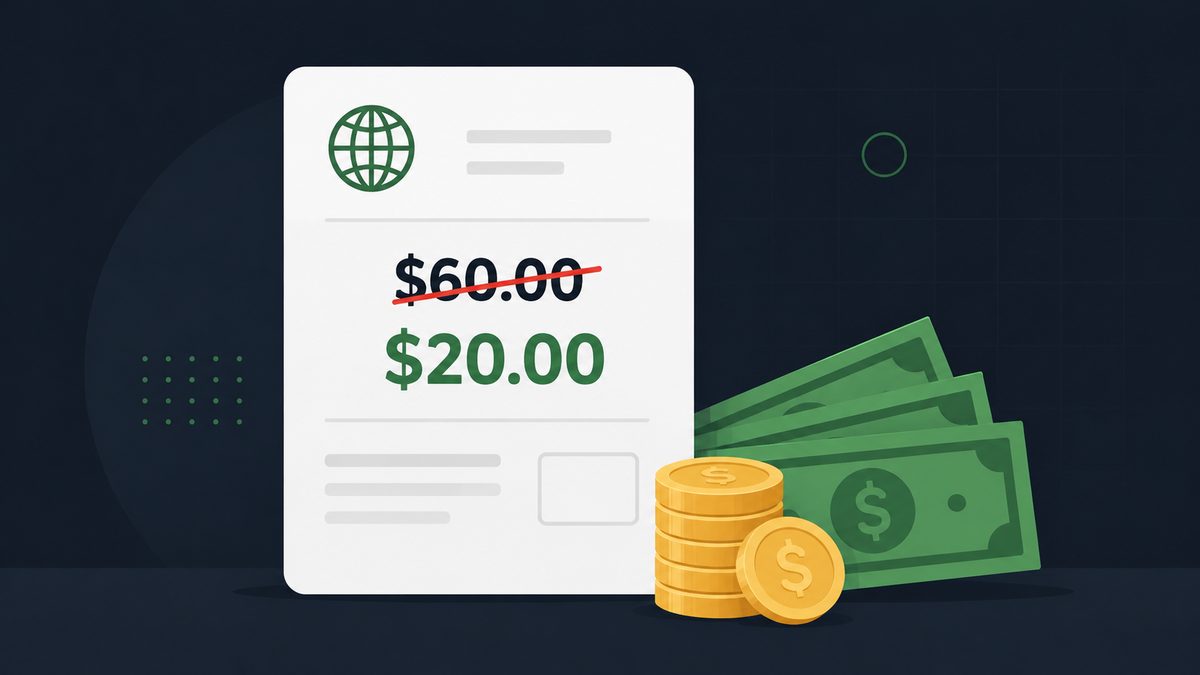
    I’ve been paying $60 a month for internet. Not because I shopped around, not because I called to negotiate — just because that’s what the bill said and I kept paying it.

    Then I tried Rocket.

    Rocket is a bill negotiation service. You hand them your bill, they call your provider and haggle on your behalf. I didn’t have to sit on hold. I didn’t have to argue with a rep. I just waited.

    They got my internet down from $60 to $20 a month. That’s $40 saved every single month.

    The honest math

    I used their automatic service, which charges 40% of your annual savings. I’m saving $480 over the year, so they took $192 upfront.

    That means my real first-year savings are $288, not $480. Spread that over 12 months and it’s effectively $24 a month in my pocket — not $40. Or said another way, I’m still paying $16 a month for the time savings.

    Was it worth it?

    Probably. Could I have called my provider and done this myself? Almost definitely. Internet companies negotiate all the time — you just have to ask.

    But here’s the thing: I wasn’t going to do it. That call had been sitting on my mental to-do list for months. Rocket actually did the thing I kept putting off, and now I have a lower bill locked in.

    Year two? That $40 a month is just mine. No fee. That’s when it really pays off.

    If you’re the type to actually make the call yourself, skip the service and just call. But if you’re like me and that call is never quite happening — Rocket might be worth the fee just to get it done.

    The Dime Effect take

    This isn’t a passive income stream, but it’s a fixed-expense reduction — which is basically the same thing. Less going out is more staying in. I’ll take it. Bill reduction is actually stream #21 on my full list of 24 income streams — this was the first real win from it.

  • 24 Income Streams: Start Earning Your First Dime

    24 Income Streams: Start Earning Your First Dime

    If you’ve read the origin post, you already know the idea: 24 income streams, earn one dime a day from each before I scale any of them. This is the full list. No cherry-picking, no hiding the weird ones — just the 24 things I’m actually building, in plain English, along with why each one made the cut.

    Some of these are typical side-hustle staples. A few of them are homestead-specific and probably not for everyone. A couple of them are genuinely experimental. I’m not claiming this is the perfect list — I’m claiming it’s my list, and that it follows the rules: every stream on it has a first dime I can realistically earn within days, costs almost nothing to test, and has a ceiling worth aiming for eventually.

    Here they all are.


    The 24 Streams at a Glance

    1. Fish Tank Live Stream
    2. Surveys & Research Studies
    3. Etsy
    4. KDP (Self-Publishing)
    5. Blog
    6. YouTube
    7. Stock Dividends
    8. Vending Machines
    9. Patreon / Bioreactors
    10. Earthworms
    11. Rabbits
    12. Quail
    13. Aquaponics
    14. Flippa
    15. Merch (Print-on-Demand)
    16. Affiliate Marketing
    17. Microgreens
    18. Twitch Subscriptions
    19. Sponsored Content
    20. Rental Property / Storage Units
    21. Bill Reduction
    22. Seedling Starters
    23. Storj & Passive Apps
    24. Flea Market / Consignment

    1. Fish Tank Live Stream

    I already have the tank, so this one costs me essentially nothing to start. The idea is to stream my aquarium on YouTube and Twitch, let it run passively in the background, and earn through tips, channel memberships, and eventually ad revenue. Live streams keep a channel active without requiring me to edit video — one of the few ways to generate content while I’m at work or asleep. First dime target: a single YouTube Super Chat or tip. Everything else is upside.

    2. Surveys & Research Studies

    The first stream I actually started, and the fastest first-dime on the whole list. I’m running Prolific as my daily baseline — $8/hr minimum, lowest disqualification rate I’ve found. That’s the only survey panel I’m using right now. They aren’t offering participant referrals, so that link is just the homepage. Branded Surveys, Respondent, and User Interviews can wait until I’m actually opening them. None of this is going to replace a paycheck, but it is real cash that doesn’t require owning anything.

    3. Etsy

    I want a digital product on Etsy that earns while I sleep. The appeal is obvious: upload a file once, sell it indefinitely, no shipping, no inventory. I’m starting with what I already know — printable planners, trackers, and templates that match the kind of thing I’d search for myself. The hard part isn’t making the product, it’s finding the keywords. I’ll be leaning on Etsy’s own autocomplete to learn what people are actually looking for before I publish anything.

    4. KDP (Self-Publishing)

    Kindle Direct Publishing lets you publish low-content books — journals, planners, trackers, activity books — to Amazon with no upfront cost. I’m not trying to write the next great American novel; I’m trying to get a quail-keeping journal or a homestead log book listed on Amazon and see if the dime arrives. The royalty rate is decent, and Amazon’s organic traffic is underrated as a free distribution channel. This one might take a few weeks to earn its first dime, but the effort per book is small once you know the format.

    5. Blog

    You’re on it. The blog’s job right now is to serve as a hub that ties all 24 streams together — the update posts link back here, the referral links live here, and eventually the traffic that finds me through search will fund a few of the other streams through affiliate commissions. Right now traffic is near zero. The strategy is to publish useful content, get it indexed, and let Google do the slow work. I’m not chasing ads (the payout floor is too high for where I am); I’m chasing the first referral click that turns into ten cents.

    6. YouTube

    Long-term, YouTube is probably the highest-ceiling thing on this list. The ad revenue on YouTube is real and recurring in a way that most platforms aren’t. Short-term, I’m not anywhere near monetization requirements, so the plan is to use it as a traffic source that feeds the blog and the live stream, and to build the kind of backlog that starts compounding views over time. YouTube Shorts from the fish tank stream are a low-effort way to stay active while the long-form library builds.

    7. Stock Dividends

    This one takes money to make money, which is why it’s in the middle of the list and not at the top. I’m looking at dividend ETFs like SCHD and VYM, which pay quarterly and reinvest automatically. The goal right now is just to get started — even a small position — so the compounding clock starts ticking. A single dime in dividends requires almost nothing invested; the point is to establish the habit and the account, not to retire on Q1 distributions.

    I also keep money in Acorns. If you open an account with my invite link, I only earn the referral if you invest at least $5 into Invest (not just Round-Ups) and keep the account open and in good standing. Promo size changes weekly — check the app for the current bonus; I’m not promising a fixed dollar figure here.

    8. Vending Machines

    Vending machines have surprisingly low barriers to entry if you buy used and negotiate a good placement. The hard part isn’t the machine — it’s finding a high-foot-traffic location where the owner will let you put one. I’m scouting laundromats, car washes, and small offices locally. This one needs a real upfront cost so it’s not a fast first dime, but a single well-placed machine can produce passive income for years with minimal maintenance. It’s on the list because the ceiling is real.

    9. Patreon / Bioreactors

    This is the weird one on the list, and I know it. I’m genuinely interested in building small bioreactors — systems that grow algae or useful microbes for gardening and aquaponics. I figure if I document the builds and post about the process, a Patreon with a small monthly membership could fund the hobby and maybe more. The first dime here would be a single $1 patron. It’s experimental enough that I might swap it if it stays at zero, but it’s mine enough that I’m giving it a real try first. The page is live: Patreon. The Name on the Jar tier is $4/mo.

    10. Earthworms

    A worm bin is cheap to start, runs mostly on food scraps, and produces two sellable things: worm castings (a premium fertilizer) and live worms (for fishing bait, composting, and reptile feed). I already have a bin going. The first dime target is a single bag of castings or a small cup of red wigglers sold locally or on Facebook Marketplace. This one is as close to true zero-input passive income as anything on the list, once the colony is established.

    11. Rabbits

    Rabbits are one of the fastest-reproducing livestock you can raise cheaply. Kits sell as pets, as meat, and as food for larger reptiles and birds of prey — there’s a market for all three. I’m starting small: one breeding pair, track the litters, calculate my actual cost per kit versus what the local market will pay. The dime arrives with the first sale. The homestead streams (rabbits, quail, earthworms, microgreens) are the ones that look strange on a side-hustle list but make a lot of sense if you already have the space and setup.

    12. Quail

    Coturnix quail are tiny, quiet, and legal in most backyards where chickens aren’t. They start laying eggs at six weeks and produce almost daily. The eggs sell well at farmers markets and to local chefs — quail eggs are considered a specialty item and command $4–$6 a dozen without much trouble. I’m tracking my cost per dozen (feed cost divided by egg count) against what the market will bear. First dime: first sold dozen, or the first farm-fresh egg sold directly.

    13. Aquaponics

    Aquaponics combines fish and plants in one system: fish waste feeds the plants, plants filter the water for the fish. It’s a real working setup and not as complicated as it sounds once it’s cycled. I can grow salad greens, herbs, or specialty plants that sell fast at local markets. I can also sell the fish when they’re big enough. The system ties into the fish tank live stream in a useful way — the same content that earns on YouTube can also document what I’m growing and selling locally.

    14. Flippa

    Flippa is a marketplace where people buy and sell websites, apps, and online businesses. The strategy I’m watching is micro-acquisitions: buying something small and already earning for a few hundred dollars, optimizing it slightly, and either holding it for monthly cash flow or flipping it for a profit. I’m not buying anything yet — first I’m learning to read listings without getting taken. The first dime from this stream will take longer than the others, but one good flip could be worth more than all the other streams combined in a single transaction.

    15. Merch (Print-on-Demand)

    Print-on-demand means I design a product, list it, and a third party prints and ships it when someone orders — no inventory, no upfront cost. I’m using Printify and listing through Etsy. The designs will tie into the fish tank and homestead brand — “Fish Tank Dad”-style mugs and shirts are a real category with real buyers. The margin per item is modest, but the effort per sale after the initial design work is essentially zero.

    16. Affiliate Marketing

    This one is already threaded through several others on this list — any product I recommend and link with a referral code is affiliate marketing. But it deserves its own entry because the strategy matters: I’m only recommending things I actually use (fish tank gear, homestead supplies, the apps on this list), and I’m joining the affiliate programs for those specific products rather than slapping random links on everything. The first dime comes when someone clicks through and makes a purchase. This is the stream most directly powered by the blog’s traffic.

    First live referral on this blog: Acorns — same invite. Sign up with the link, fund at least $5, keep the account active, or neither of us gets paid.

    17. Microgreens

    Microgreens are crops that take 7–14 days from seed to harvest and sell for $20–$40 a tray at farmers markets and to local restaurants. The startup cost is low (seeds, growing trays, a grow light), the turnaround is fast, and demand is steady because restaurants want consistent local supply. My plan is to start with one crop I already know (sunflower or pea shoots), prove out the unit economics, and expand from there. First dime: first tray sold.

    18. Twitch Subscriptions

    Twitch Affiliate status unlocks subscriptions, which start at $4.99/month. The fish tank stream will be running on Twitch anyway — the incremental effort to set up Twitch sub tiers and perks is small. The viewers who find me there and want to support the stream directly can subscribe; that’s ten cents per subscription (roughly). Reaching Affiliate on Twitch requires 50 followers and a modest average viewership, which is a realistic early goal. This and the YouTube live stream overlap heavily, so the content effort is shared.

    Once the blog or YouTube channel has any real audience at all, there are small brands in the aquarium and homestead space that pay for honest reviews, mentions, or demos. I’m not there yet, but I’m building the media kit now so the pitch is ready when it’s time to send it. The first dime from this stream will arrive later than most — you need something to show brands before they pay — but when it does it tends to arrive in larger chunks than the daily earners.

    20. Rental Property / Storage Units

    This one is aspirational at this stage of the experiment, and I’m honest about that. I don’t own rental property. What I’m doing right now is learning the market — looking at local storage unit rental prices, researching what a small self-storage facility actually costs to operate, and understanding the numbers. The point of keeping it on the list is to stay oriented toward the ceiling, not just the floor. If another stream earns fast and frees up capital, I want to know where it could go.

    21. Bill Reduction

    Technically this isn’t earning income — it’s stopping the bleed. But a dollar saved is a dollar I don’t have to earn, and the math is the same. I’m systematically going through recurring bills (phone, internet, insurance, subscriptions), calling providers to negotiate, and canceling anything I don’t actively use. A $10/month reduction compounded over the year is $120 back in my pocket. That’s real money, and the “first dime” here is the first successful negotiation. It’s on the list because it works and it costs nothing but a phone call. I already knocked $40 off my internet bill — see: Rocket Cut My Internet Bill by $40 a Month — Was It Worth the $192 Fee?

    22. Seedling Starters

    In spring, garden centers sell seedlings for $3–$6 per flat. I can grow those same seedlings myself for cents and sell them at local markets or on Facebook Marketplace before they ever hit a garden center shelf. This is a seasonal stream, but it’s a fast one — seeds to sellable plants in a few weeks, and buyers are easy to find when people are putting in their gardens. First dime: first flat sold. The aquaponics setup helps here since I have the infrastructure and the lights.

    23. Storj & Passive Apps

    Storj lets you rent out unused hard drive space to a decentralized cloud storage network and earn crypto in return. If you have a machine that’s always on with unused disk space, this earns passively in the background without any ongoing effort. I’m stacking it with bandwidth-sharing apps like Grass and EarnApp, which pay to use your idle internet connection. The key is making sure the bandwidth apps don’t starve Storj’s uploads. Combined, these are the closest thing to truly set-it-and-forget-it income on the list — assuming you have always-on hardware to run them.

    24. Flea Market / Consignment

    The most old-fashioned entry on the list, and honestly one of the fastest first dimes available to anyone who owns anything. I’m identifying items I own but don’t use, pricing them realistically, and selling them at local flea markets or consignment shops. This isn’t a scalable business — eventually I’ll run out of my own stuff to sell — but as a way to learn how to price, pitch, and close a face-to-face sale, it’s the best possible low-stakes training ground. And it funds the other streams while I’m still in the testing phase.


    What Comes Next

    Every one of these streams has its own “first dollar” post coming — the moment I earn a real ten cents from it, I’ll document what I actually did, what I tried that didn’t work, and whether the stream earns the right to stay on the board and get scaled. That’s the rule.

    If you’re building your own list, you don’t need 24. You need however many you can actually run in parallel without letting all of them go stale. The number matters less than the discipline: earn the first dime from each one before you optimize anything. The rest figures itself out.

    A dime can make a difference. Here are my 24.

  • Start Earning: The Dime-a-Day Method Explained

    Start Earning: The Dime-a-Day Method Explained

    Everyone selling a money course wants to show you the screenshot with a lot of zeros. I want to show you the first dime — ten cents — and right now, I haven’t earned it yet.

    This is the plan behind The Dime Effect: build 24 different income streams, and earn just one dime a day from each. Not a fortune. Not a full-time replacement. Ten cents — proof that the thing works at all. Because a dime can make a difference, and the whole idea is that small, consistent amounts compound into something that actually changes your life. The rule is simple: once a stream earns its first dime, it earns the right to be scaled. Until then, it stays small, fast, and cheap to test.

    I’ve spent a while quietly testing a handful of these on my own — you’ll find those early experiments scattered around the blog. This is the relaunch: the full 24-stream plan, structured and out in the open, built from the ground up. If you’ve ever felt paralyzed by the idea of “starting a side hustle” because the goal felt enormous, follow along — I’m starting from the ground floor right alongside you. Here’s how the dime-a-day method is supposed to work, why I’m betting on many tiny streams instead of one big one, and how you can start your own from scratch.

    The idea: why “just a dime a day”?

    A dime is a deceptively powerful target. It’s small enough that almost any honest idea can hit it, which kills the excuse that something “won’t work.” And it’s real enough that the moment ten cents lands, I’ll have crossed the only line that matters — the line between theory and income.

    Most people never cross it. They research, plan, and buy courses, but they never make the first cent. The dime-a-day method is designed to force the issue. The goal isn’t to get rich this week; it’s to manufacture proof, one stream at a time. A single dime earned will tell me three things a spreadsheet never can:

    • There is real money on the other end, not just a promise.
    • The path from “idea” to “money in account” actually connects.
    • The thing is worth the time it would take to make it bigger.

    Scaling a proven dime is a math problem. Scaling a zero is a fantasy. So I’m going after the dime first.

    Why 24 streams instead of one big hustle

    Conventional advice says to pick one thing and go all in. That’s good advice — after you know which thing works. Before that, concentration is just a more confident way to be wrong, and right now I don’t know which of these 24 ideas is the winner.

    Spreading the early bet across many small streams of income does a few things for me:

    1. It de-risks the search. If three streams flop, I still have twenty-one. Any single failure is cheap and forgettable.
    2. It reveals my unfair advantages. I genuinely don’t know which of these will be easy for me and miserable for everyone else. Running them in parallel should surface that fast.
    3. It compounds quietly. Twenty-four streams at a dime a day works out to $2.40 a day — about $72 a month, or $876 over a year. And that’s the floor, before any of them are scaled. The whole point of a floor is that it only goes up.
    4. It keeps momentum high. Small daily wins are addictive in the right way. Motivation follows progress, not the other way around — and I’ll need the momentum.

    Twenty-four is also just a useful number: one new focus stream per day rotates through the whole list roughly once a month, so nothing goes stale and nothing gets ignored.

    The one rule that changes everything: earn the first dime first

    This is the heart of the method, so I’ll be blunt about it.

    No stream gets optimized, automated, branded, or scaled until it has earned its first real dime.

    That rule sounds almost insultingly simple, but it quietly eliminates the most expensive mistake people make: pouring weeks into the infrastructure of a business that was never going to make money in the first place. The logo, the website, the perfect name — all of it is procrastination wearing a productivity costume until ten cents has actually landed.

    First dime first. Everything else is a reward I have to unlock.

    How I’ll pick (and swap) my 24 income streams

    The list isn’t sacred. The plan is that any stream which refuses to produce a first dime after a fair try gets cut and replaced — the lineup is meant to evolve as I learn. When I’m choosing what goes on (or off) the board, I’m screening each idea against four questions:

    • Can I take the first action today? If it needs a week of setup before I can even try, it’s not a dime-a-day stream yet.
    • Is the first dime within reach in days, not months? Speed of feedback is the whole game.
    • Is the cost to test near zero? I want to learn cheaply, not bet the rent.
    • Could it scale later if it works? A dime that can only ever be a dime is fine for practice, but I’d rather practice on something with a ceiling.

    To make that concrete, the kinds of things on my list include: small reward and cashback apps, a little interest on savings parked in the right account, walking and receipt apps, light crypto and survey earners, selling something I already own, monetizing a hobby’s byproducts, affiliate recommendations for tools I actually use, and a handful of content streams that earn through ads or tips. (I’ll break each one down in its own post as it earns its first dime — and gets the green light to grow.)

    The exact 24 matter less than the discipline behind them.

    My daily system for quick wins

    The method only works if the daily action stays genuinely small. Here’s the loop I’m going to run:

    • Pick one stream as today’s focus. Rotate through the list so each gets regular attention.
    • Do the smallest revenue-producing action. Not “build the brand” — open the app, claim the reward, make the offer, list the item, publish the thing.
    • Log the result. A dime, a no, or silence. All three are data.
    • Promote or pause. First dime earned? It graduates toward scaling. Dead after a fair shot? Swap it out.

    Fifteen to thirty focused minutes should be enough. The constraint is the feature: a small daily action is one I’ll actually repeat, and repetition is what turns 24 experiments into 24 results.

    The bigger goal: from a dime to scale

    To be clear, a dime a day isn’t the destination — it’s the filter. The real plan is to find the two or three streams that earn their first dime easily and enjoyably, then pour the time I’d been spreading across 24 into scaling those few. The dime-a-day phase is how I’ll earn the right to know where to concentrate, instead of guessing on day one.

    That’s the whole arc: many small bets to find the winners, then a few big bets to grow them. Diversify to discover, concentrate to scale. But all of that comes later. Today, the job is just to start.

    Frequently asked questions

    Is making a dime a day actually worth it?

    On its own, no — ten cents won’t change your life. As a proof-of-concept filter that tells you exactly where to invest real effort, it’s one of the most valuable dimes you’ll ever earn. And across 24 streams it already adds up to roughly $876 a year before any scaling.

    How long until the first dime from a new stream?

    That’s exactly what I’m setting out to find. The streams I plan to keep are the ones that pay within days; anything that stays at zero after a fair, honest attempt gets swapped for something new.

    Do I need money to start?

    Mostly no. The four-question screen specifically favors streams that cost almost nothing to test. The investment is time and consistency, not capital — though a few streams (like earning interest) do reward having a little saved.

    How many income streams should a beginner have?

    Start with far fewer than 24 — even two or three is plenty to learn the loop. The number matters less than committing to earn a real first dime from each before adding more.

    Why focus on multiple streams of income at all?

    Because no single early idea is reliable enough to bet everything on. Multiple small streams let you discover what works cheaply, then scale the proven winners with confidence.

    Follow the journey

    From here on, I’ll be documenting every stream as it earns its first dime — what I tried, what worked, what flopped, and what got cut. If you’re tired of money advice that skips the part where you actually start, this is the blog that begins at ten cents.

    A dime can make a difference. Let’s go earn 24 of them.

  • Copper-A Lesser Coin Than The Dime

    Copper-A Lesser Coin Than The Dime

    Today I’m going to be talking about the app called copper. https://www.getcopper.com/. I use it as a receipt scanning app, super easy scan a receipt get three creds. A cred is worth a penny so scan 4 apps a day and we’re at that superior coin, the dime. It’s that easy. Open the app, take a picture of the receipt and submit it. That’s it.

    I enjoy this app because of it’s ease to use. While it’s not passive it’s pretty quick to do, I do it while there are commercials running on twitch. You can’t really scale this up to more because there is a 20 receipt limit a week, but if you stack it with other apps like fetch you can start to have the earnings add up.

  • Passive Money-The Easiest Money You’ll Ever Make

    So there is this thing called interest. It’s free money. All you have to do is put your money in an interest bearing and account and watch it roll in. I use Robinhood, if you are a gold member you earn 4% interest. To get that 10 cents a day you’ll need to deposit $912.50, but to cover the 5 dollars a month you’ll need a grand total of $2412.50. I just park my emergency fund in this account, it’s better than letting it sit in my checking account and earning on interest. Here’s my referral link if you’d like to help me out join.robinhood.com/johnr10478.

    So to reach .10 today just move some money around and you don’t have to do anything else again. It’s the easiest way to make money and your money is insured up to a certain amount as long as you choice a FDIC institution. The downside is you need money to start making money this way. Keep saving, keep adding, believe in the dime effect.

  • Ember-Start a fire earning crypto

    Hello all, today lets talk about Ember https://emberfund.io/. It’s a crypto mining app that runs in the background, all you have to do is start every 24 hours and earn. You watch one ad and you are done until tomorrow. You start by earning 1 Satoshi, a small division of Bitcoin, an hour but if you sign up with my link https://emberfund.onelink.me/ljTI/jgwznb5o?mining_referrer_id=MNG-BELL-UJ9 or link your account with my code MNG-BELL-UJ9, you and I will both earn a 6 Satoshi bonus each hour. You are capped at 100 Satoshi an hour. If you reach that cap you will be earning 2.50 a day, for just watching an ad. This is amazing, easy way to earn money.

    At the time of this posting 94 Satoshi is the value of a dime, $.10. So with one sign up I was already meeting my goal, but every bit will help add to to add to that and generate money for my next dime a day investment.